
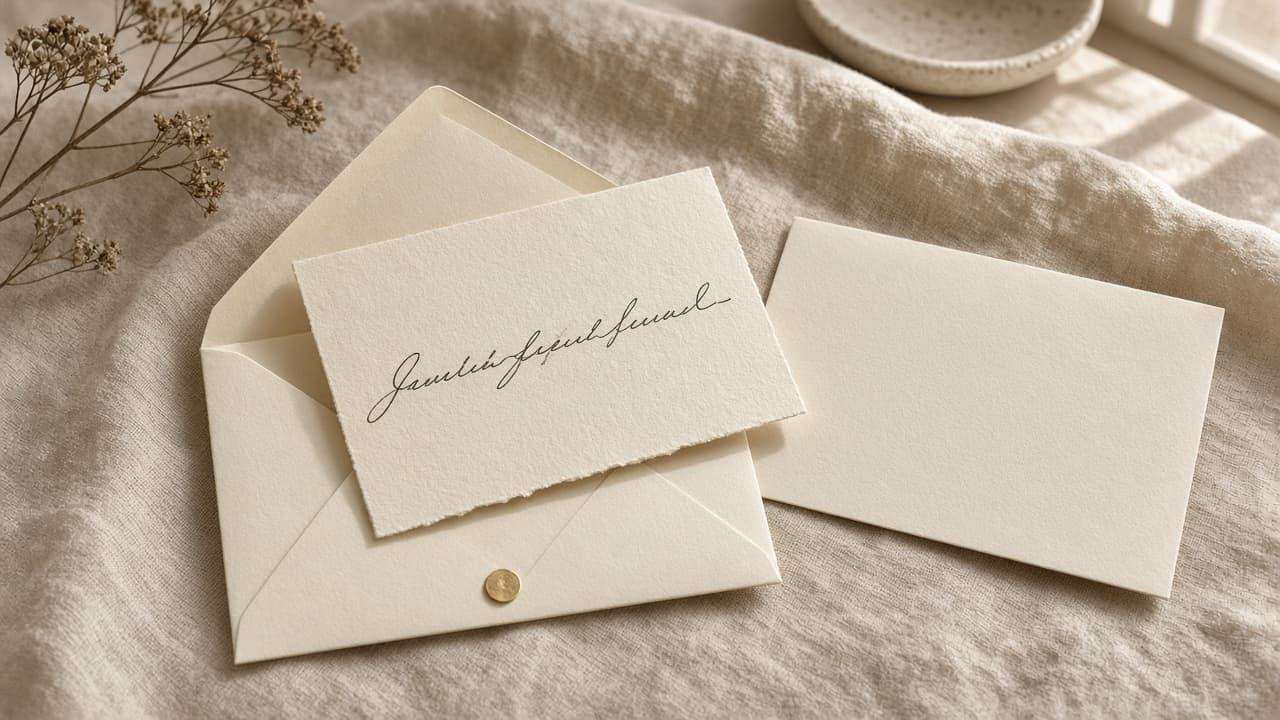
A first order tells you someone was willing to try you. It doesn't tell you they'll come back. A thank-you note sits right in the gap between the first purchase and the second, and the hard part is usually deciding what to say. This guide covers what belongs in a handwritten thank you note to customer for purchase, what to leave out, and how to point toward the next order without turning the note into an ad.
Start with the job the note has to do
A post-purchase note has two jobs, in this order:
- Confirm the customer made a good choice. They spent money with a brand they may not know well. The note should make them feel their money went to the right merchant, and that there are real people behind the box.
- Leave the door open for a second order. Not a pitch. A reason to remember you when they need something again.
If a line doesn't serve one of those two jobs, it probably doesn't belong.
What to include
Their name, and something specific to their order. "Thanks for your order" reads like a template, because it is one. Using the customer's name plus a reference to what they bought shows that someone noticed this particular purchase. If your customer data includes purchase information, use it.
Example line (written for this guide): "Hi Dana, thank you for picking up the oak cutting board. We hope it earns a permanent spot on your counter."
One human detail about your brand. Who packs the orders or where you're based. One sentence is enough to show there's a real business here.
Example line (written for this guide): "Our team in Portland packs every order by hand, and yours was no exception."
A useful next step. A care tip or how-to-use suggestion helps them enjoy what they already bought.
Example line (written for this guide): "A little mineral oil once a month will keep it from drying out."
A soft invitation to come back. If you include an offer for the second order, a personal code with a clear expiration date is easy to act on. Frame it as a thank-you, not a deal.
Example line (written for this guide): "When you're ready for your next one, here's 15% off, just for you: DANA15, good through November 30."
A sign-off from a person. A first name feels warmer than a corporate signature.
What to leave out
- The order confirmation, restated. They already have the receipt email. Don't list SKUs, totals, or tracking numbers.
- Stacked offers or asks. One offer or one request, at most. A note that thanks someone and then asks for three favors reads as transactional.
- Urgency language. "Hurry," "last chance," and countdown framing undercut the sincerity of the thank-you.
- Superlatives. Specific and modest reads as more trustworthy than "the best in the world."
- Long paragraphs. Handwritten notes are short by nature. Aim for four to six sentences.
Putting it together
Here is a full sample note built from the lines above. It's an illustration written for this article, not a real customer note or a message from any brand:
Hi Dana,
Thank you for picking up the oak cutting board. We hope it earns a permanent spot on your counter. Our team packs every order by hand, and yours was no exception. A little mineral oil once a month will keep it looking new. When you're ready for your next one, here's 15% off, just for you: DANA15, good through November 30.
With thanks,
Sam at [Brand]
The offer comes last so the gratitude lands first.
The note is only part of the experience
A sincere note in a plain envelope with a printed label can still feel like marketing. When the whole piece looks like your brand, the message inside reads as more personal.
That's the approach behind Tangible Post. Rather than a generic letter, each piece is a branded experience that arrives separately from the product: a handwritten note with a custom card printed on the other side, a handwritten address, a real stamp, a custom-printed envelope, and a custom-printed return address. Notes are written in ink with a real pen. Personalization can go beyond a first name, using merge fields such as the customer's name, purchase information, a unique coupon code, and an expiration date, so lines like the examples above can be tailored to each customer while keeping your brand's voice consistent. You approve the audience, message, and offer before anything is produced.
A simple place to start
Write the note the way you'd thank someone in person: their name, what they bought, a genuine thank-you, one helpful detail, and at most one reason to come back. Read it out loud. If it sounds like an email blast, cut until it doesn't.
If you'd like to see how your note could look as a fully branded piece, Tangible Post can walk you through the options for post-purchase and second-purchase campaigns.