
Most direct mail planning starts with what's inside: the offer, the message, the card design. But that skips the moment that decides whether any of it gets seen.
Before a customer opens anything, they pick it up, glance at it, and make a call: keep or toss. In those few seconds, the only things working for you are on the outside. The envelope, the address, the stamp, and the return address are already telling the customer who sent it and whether it's worth their time.
For e-commerce brands, that outside layer is not packaging. It's the first page of the brand experience.
The mailbox sort happens in seconds
People sort mail quickly, often standing by the kitchen counter or the recycling bin. Anything that looks mass-produced tends to go unopened.
Printed labels, metered postage, a generic return address, a window showing a form letter: envelopes that look like bulk mail get treated like bulk mail. Not because customers dislike your brand, but because nothing on the outside tells them it's from you.
The goal on the outside is simple. Make it clear, before the envelope is opened, that this came from a brand they chose to buy from and that a real effort went into sending it.
What each outside element communicates
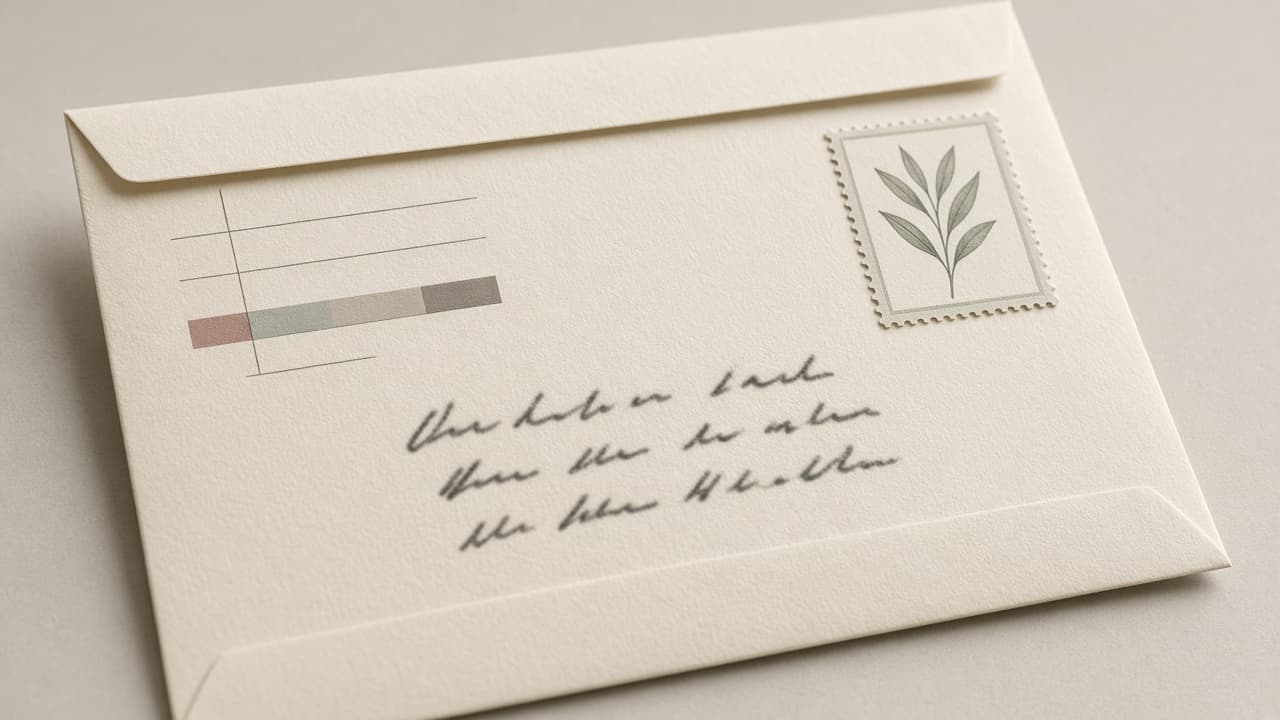
Each part of the envelope sends its own signal. Together they answer the customer's first question: who is this from, and is it for me?
The custom-printed envelope
A custom-printed envelope in your brand's colors and design is recognizable at a glance. Customers who have unboxed your product and opened your emails already know your visual identity. When the envelope matches, they connect it to you before reading a word.
The handwritten address
A handwritten address is one of the clearest signs that a piece isn't bulk mail. Printed labels read as automated. Real ink, with the natural variation of handwriting, reads as personal and addressed to them specifically.
Real U.S. postage
Customers have learned to spot metered or pre-printed postage on promotional mail. A real stamp looks like correspondence, the kind of mail people send to people.
The custom-printed return address
The return address is easy to overlook, but it's where the customer confirms who sent the piece. A custom-printed return address that shows your brand clearly, styled to match the envelope, removes the guesswork. It's from the store they bought from, not a stranger.
Why this matters for loyalty, not just open rates
Getting the piece opened is part of it. The bigger payoff is what the outside says about the relationship.
When a customer recognizes your brand on a carefully made envelope, a handwritten address, and a real stamp, the message is: we remember you, and we took the time. That's how customers come to feel their money went to the right merchant, one that treats them like a person and not a row in a spreadsheet.
That feeling is what loyalty is made of, and it's hard to create with another ad in a crowded feed.
The outside sets up the inside
A strong envelope makes a promise the contents have to keep, so plan the outside and inside as one branded package. In a Tangible Post mailing, the package includes:
- A custom-printed envelope in your brand's design
- A handwritten address and real U.S. postage
- A custom-printed return address
- A handwritten note, written in real ink with a real pen, personalized to the customer
- A custom card printed with your brand's creative on the other side
Each element backs up the others. The envelope gets recognized, the return address confirms the sender, and the handwritten note and branded card deliver on what the outside promised.
Practical tips for e-commerce marketers
When you plan your next mailing, give the outside of the envelope the same attention as the inside:
- Make the brand obvious. Customers should be able to identify you from the envelope alone, without opening it.
- Match your existing identity. Use the colors, logo treatment, and tone customers already know from your packaging and emails.
- Treat the return address as a branding element. Make sure it clearly names your brand, not a fulfillment center or a generic company name customers won't recognize.
- Avoid bulk-mail signals. Skip labels, windows, and pre-printed postage when the goal is a personal moment.
- Check addresses before you send. Even the best envelope can't reach someone who moved. Clean, current data matters.
Soft close
Your brand experience doesn't start when the customer opens the envelope. It starts when they pick it up. A custom-printed envelope, a handwritten address, real postage, and a clear return address tell customers who it's from and that it was meant for them.
If you'd like to see how a fully branded package could look for your customers, from the envelope to the note inside, Tangible Post can walk you through it. And under the Tangible Promise, every piece is made properly, written with a real pen, assembled correctly, and mailed on time. If we get the craft wrong, we make it right.