
What people picture vs. what actually arrives
Mention handwritten direct mail marketing to most e-commerce teams and they picture one of two things. The first is a plain thank-you card tucked into the shipping box. The second is a mass-mailed postcard with a script font meant to look like handwriting. Both are easy to picture, and both are easy for a customer to forget.
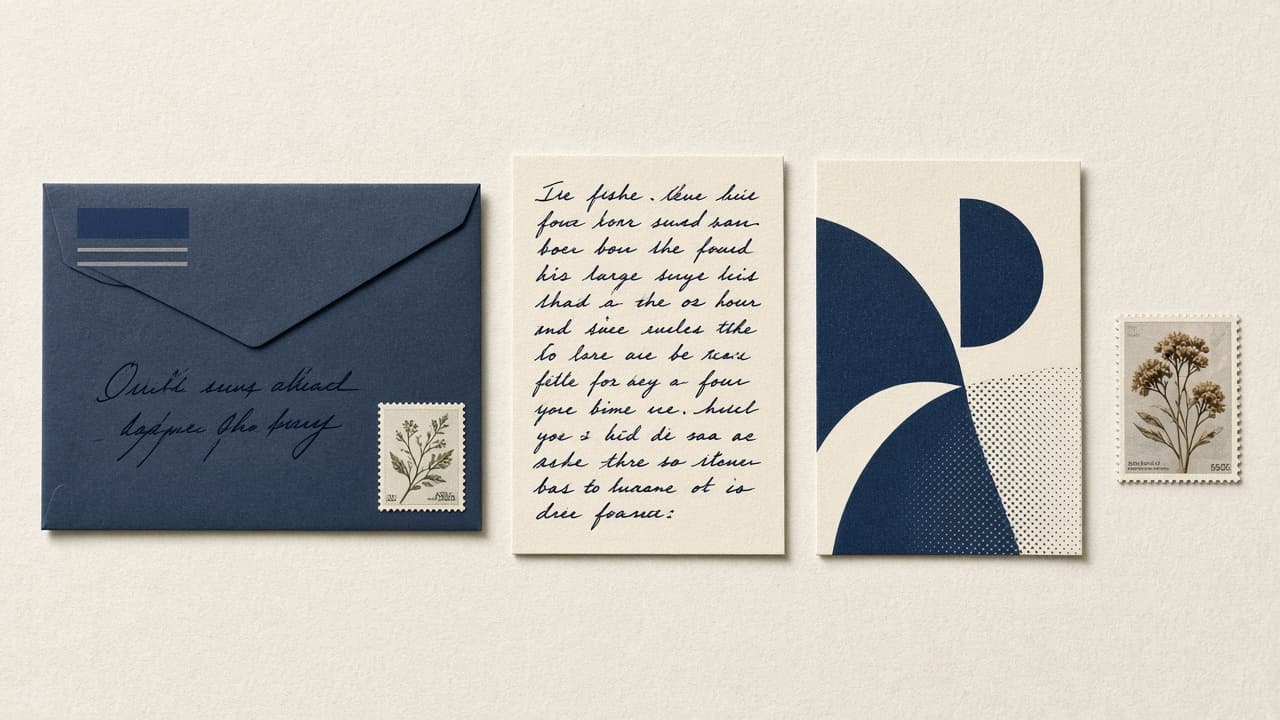
Tangible Post sends something different. It is not a generic handwritten letter. It is a branded experience that arrives separately from the product: a custom package with a handwritten note, a custom card printed on the other side, a handwritten address, a real stamp, a custom-printed envelope, and a custom-printed return address. Each part is built to show the customer that a real brand, the one they chose, is on the other end of the order.
What's in the package, piece by piece
It helps to go through the mailing in the order a customer sees it.
The envelope. The first thing in the mailbox is a custom-printed envelope in your brand's look. It does not look like bulk mail, and it is clearly from you.
The handwritten address. The customer's name and address are written by hand, not printed on a label. That is often what gets the envelope opened instead of set aside with the flyers.
The real stamp. The envelope carries real U.S. postage. It is a small detail, but customers know what personal mail looks like, and a stamp is part of it.
The custom-printed return address. Your brand's return address is printed on the envelope, so the customer knows who it is from before opening it.
The handwritten note. Inside is a note written for that customer. Tangible Post personalizes each message with merge fields such as the customer's name, a unique coupon code, an expiration date, purchase information, or customer status. The note can mention who they are and what they bought, not just "Dear Customer."
The custom card. The other side of the note is a fully branded printed card. This is where your brand's visual identity goes: artwork, colors, and any offer or message you want to back up the note.
Put together, the customer gets a piece of mail that feels personal on the outside and is clearly branded on the inside.
Why it sits outside the product
Brands sometimes ask why they shouldn't just put a handwritten card in the shipping box. The difference is where the moment happens.
A card inside the box gets opened along with the product, the packing material, and the receipt. It is part of the delivery. It is easy to throw out with the packaging, and it arrives when the customer is focused on what they ordered.
A separate mailing arrives on its own. It is not a gift in the box or a postcard menu of products and discounts. It is a direct, personal piece of mail from the brand to the customer. That separation is the point. The customer gets a second moment with your brand that has nothing to do with unboxing and everything to do with being recognized.
That is where loyalty comes in. Customers have many places to spend their money, and many brands only reach them through automated emails and retargeting ads. A branded, handwritten piece of mail tells the customer they bought from a real company that noticed them. The goal is for the customer to feel their money went to the right merchant. That feeling is what brings them back when they're ready to buy again.
How a brand uses it after an order
Tangible Post starts with customer data you already have. You can connect Klaviyo directly or upload a customer CSV. From there you choose the audience, the timing, and the goal. You can run a one-time campaign or make it part of your automated flows.
Your team approves the audience, message, offer, and brand experience. Tangible Post handles creative, personalization, handwriting, printing, quality control, postage, and mailing. Campaigns typically launch within three to five business days from purchase, plus postal delivery time.
Here are the points in the customer lifecycle where a mailing fits:
- Post-purchase: show new customers there's a real brand behind the box.
- Second purchase: give first-time buyers a personal reason to come back.
- Cross-sell: put a relevant product offer in front of proven buyers.
- Replenishment: reach repeat-use customers around the time they may need more.
- VIP and loyalty: recognize top customers, for example with early access.
- Milestones: turn year-end thanks into a reason to come back.
- Win-back: remind lapsed customers why they chose you in the first place.
For a first campaign, post-purchase or second-purchase is a reasonable place to start, because the order is recent and the note can mention it directly. Tangible Post also offers matchback attribution, which connects campaign recipients to later orders within an agreed window. That lets you check results against your own data.
Tangible Post's quality promise covers production: the piece is made, written, assembled, and mailed as you approved it. It does not promise a response rate. Results depend on your list, your offer, and your timing, so choosing the right segment and message matters.
Planning your first campaign
If you're thinking about adding handwritten mail to your post-purchase or retention program, a good first step is to pick one segment and one moment in the customer lifecycle and build from there. If it would help, we're happy to talk through which customers to start with, what the note should say, and how the card and envelope can reflect your brand.