
If you already run retention in Klaviyo—or export customer lists as CSVs—you have probably looked at a direct mail automation platform and wondered which one belongs in your stack. The category sounds simple: connect a list, personalize a message, and send physical mail without a separate print shop project.
In practice, “automation” covers very different products. Some tools are built to blast postcards at scale. Others are built to send a branded, personal package that feels like it came from your store. If you are comparing a direct mail platform or shopping for the best direct mail automation software for ecommerce loyalty, the first job is to know which problem you are solving.
This guide is for marketers evaluating platforms—not a how-to on wiring a single segment, and not a deep dive on attribution math. It is a buyer’s framework: what the category means, what “best” should mean for ecommerce, how postcard automation differs from loyalty-oriented branded mail, where Tangible Post fits, and a practical checklist you can use side by side.
What marketers mean by a direct mail automation platform
A direct mail automation platform (sometimes called direct mail software) is software that turns an audience you already have into mailed pieces on a schedule or trigger. Typical capabilities include:
- List sync or upload. Pull recipients from an ESP segment, ecommerce export, or CSV instead of retyping addresses.
- Personalization. Merge fields for name, offer codes, dates, or purchase details so each piece is not identical copy.
- Campaign or flow triggers. Send a one-off campaign, or attach mail to a lifecycle moment you already define in email.
- Production and postage. The vendor handles print or handwriting, assembly, and mailing so your team is not managing a print broker for every send.
- Basic reporting. Delivery status and, on stronger platforms, a way to connect recipients to later orders.
That definition is broad on purpose. Two vendors can both claim “automation” while delivering completely different customer experiences. One might optimize for the lowest cost per piece and the widest format menu. Another might optimize for brand control and a consistent loyalty package. Both are direct mail software. Only one may match what you are trying to do.
For ecommerce marketers, the useful question is not “Does it automate?” It is “What does the customer receive—and does that match the relationship we already have with them?”
What “best” should mean for ecommerce
Search results for the best direct mail automation software often rank feature lists: more formats, more templates, more integrations. Those matter, but they are not the full buying criteria for a brand that already has paid customers in Klaviyo or a CRM export.
For ecommerce, a strong direct mail automation platform usually scores well on five practical dimensions:
- List sync that fits how you already work. Can you send from a Klaviyo segment or a clean CSV without rebuilding audiences in a second tool? Selective sends matter more than blasting everyone.
- Personalization beyond a first name. Merge fields for coupon codes, expiration dates, purchase context, or customer status turn automation into something that feels intentional.
- Brand control on every surface. For loyalty mail, the envelope, return address, and card art are part of the product—not optional extras. Look for platforms that treat brand as a requirement, not a template afterthought.
- Real postage and a clear production standard. Know whether the piece gets a real stamp, how addressing is done, and what quality bar the vendor stands behind.
- Measurement at a useful altitude. You should be able to see delivery and connect mail to orders in a window you agree on. You do not need a full attribution thesis to ask whether a platform reports honestly.
“Best” is relative to the job. If the job is a large promotional postcard run, a high-volume postcard tool may win on cost. If the job is making existing customers feel their money went to the right merchant, brand control and package quality usually outweigh format count.
Postcard automation platforms vs loyalty-oriented branded mail
This is the contrast most buyers miss when they evaluate a direct mail platform.
Postcard automation platforms are built for visibility and volume. The piece is open by design: offer, imagery, and address live on the same card. Setup is often fast—pick a size, drop in a template, sync a list, mail. That model works well for broad promotions, announcements, and acquisition-style mail where you want the message seen immediately.
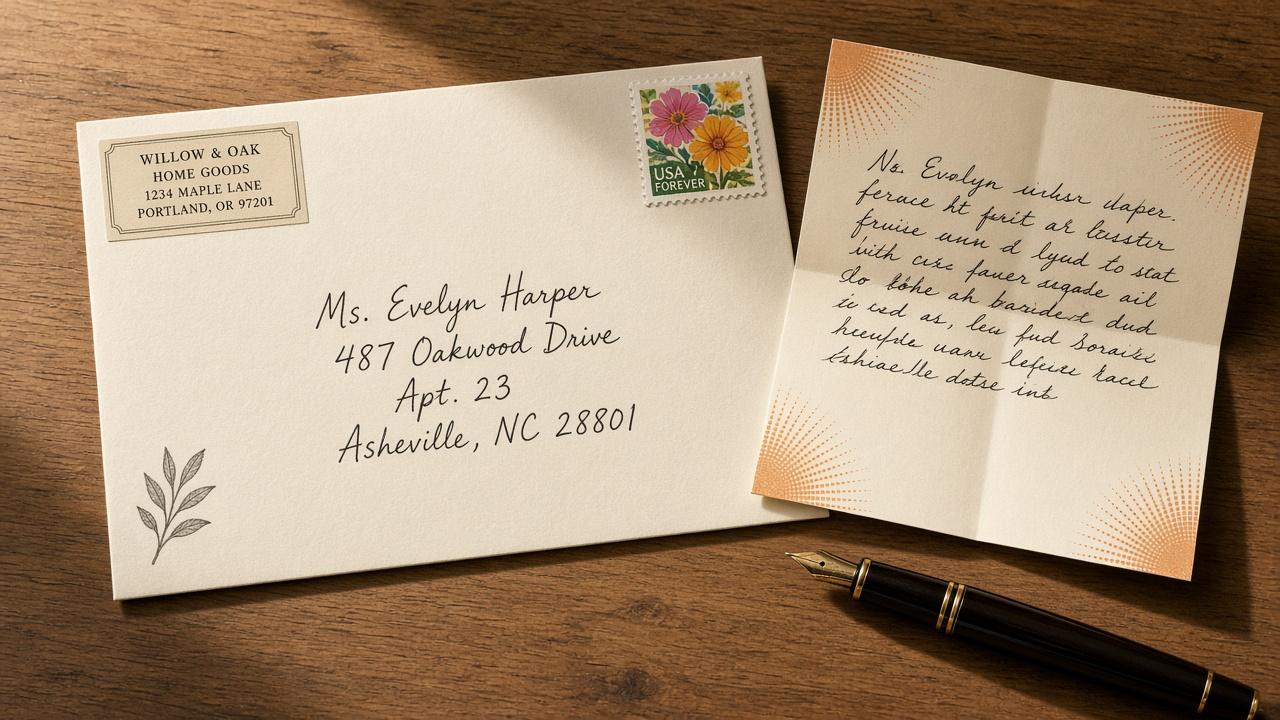
Loyalty-oriented branded mail is a different product category with a different goal. The customer already bought from you. The mailbox moment should feel personal and clearly from your brand—not like another ad next to the catalogs. The format is usually a closed package: an envelope that carries brand signals before it is opened, and a note that reads as written for that person.
Neither approach is “wrong.” They solve different problems. Trouble starts when a brand shopping for loyalty automation lands on postcard software by default because that is what ranks for “direct mail automation.” Postcard tools are excellent at postcard jobs. They are a poor fit when you want customers to feel recognized, not targeted.
When you compare vendors, put this question on the scorecard: Is this platform primarily a postcard automation system, or is it built around a branded package experience? If the homepage leads with postcard sizes and blast volume, you are looking at the first category. If it leads with handwriting, branded envelopes, and loyalty use cases, you are looking at the second.
How Tangible Post fits
Tangible Post is a direct mail automation platform aimed at ecommerce loyalty—not a postcard blast tool, and not a generic handwritten letter service.
There is one branded package, not a format menu. Every send is the same branded experience outside the product the customer already received:
- A handwritten note, with a custom card printed on the other side
- A handwritten address
- Real U.S. postage (a real stamp)
- A custom-printed envelope, if you add your design (otherwise a plain white A7 envelope)
- A printed return address, when you add a return label
You trigger that package from the lists you already use: Klaviyo segments or a customer CSV. You choose who should get it and what the note should say (including merge fields). Tangible Post handles production, postage, and mailing. The automation is the connection between your existing audience and a consistent branded mail experience—not a switchboard of postcard sizes and templates.
If you are evaluating platforms and your goal is loyalty—first-time buyers deciding whether to return, VIPs who already ignore the inbox, or customers who need a physical reminder that your brand is real—Tangible Post is designed for that job. If you need high-volume postcard promotions, a postcard-first vendor is the better category match. Choose on purpose.
Practical selection checklist for comparing platforms
Use this checklist when you demo a direct mail automation platform or shortlist direct mail software. Score each vendor honestly; the “best” answer depends on your use case.
Audience and workflow
- [ ] Connects to Klaviyo segments and/or accepts CSV uploads without rebuilding the list elsewhere
- [ ] Supports selective sends (not only full-list blasts)
- [ ] Fits campaign and/or automated flow timing you already use
Personalization
- [ ] Merge fields beyond first name (codes, dates, purchase or status fields you provide)
- [ ] Message approval workflow so marketing owns the copy before production
Brand and package
- [ ] Clear whether the product is postcard-first or a branded enclosed package
- [ ] Custom envelope and return address available (not only a white stock mailer)
- [ ] Handwritten note and handwritten address if loyalty is the goal
- [ ] Real stamp / real U.S. postage if that matters to how the piece is perceived
Production and trust
- [ ] Stated quality standard and what happens if craft falls short
- [ ] Transparent timeline from approval to mail drop
- [ ] No surprise format decisions mid-campaign
Measurement (high level)
- [ ] Delivery visibility
- [ ] A defined way to connect recipients to later orders (matchback or equivalent)—without requiring you to redesign your entire analytics stack on day one
Category fit
- [ ] Homepage and demos match the job you actually have (loyalty package vs postcard volume)
- [ ] Pricing and minimums make sense for selective ecommerce sends, not only mass runs
Walk two vendors through the same checklist. Differences show up quickly once you stop treating “automation” as a single feature.
Choosing the platform that matches the mailbox moment
A direct mail automation platform is only as good as the experience it puts in the mailbox. Ecommerce marketers who already trust Klaviyo segments or CSV exports do not need more complexity in the stack. They need a clear category decision: postcard automation for promotional volume, or a loyalty-focused branded package for customers who should feel remembered.
Tangible Post sits in the second group—one branded handwritten package, triggered from the lists you already have, built so customers feel their money went to the right merchant.
If that is the problem you are solving, set up your Tangible Post account and compare it against the checklist above. For more handwritten direct mail playbooks, browse the blog. Bring your shortlist, your segments, and the experience you want someone to have when they open the envelope. The right platform is the one that automates that experience—not a different one.