
If you have ever shopped for direct mail, you have probably seen the menu. Postcards in a few sizes. Catalogs. Letters. Package inserts. Self-mailers. Each comes with its own specs and decisions.
A menu can be useful when you know exactly what you need. But for many e-commerce marketers, it turns a simple goal ("remind our customers we value them") into a production project. You end up choosing a format before you have decided what the customer should feel when they open the mailbox.
Tangible Post starts somewhere else: with one consistent handwritten package that looks and feels like your brand every time it arrives. The experience comes first, and it stays the same from one mailing to the next.
Start with the experience, not the spec sheet
Formats are containers. They describe paper, folds, and postage classes. They do not describe the experience a customer has when your mail arrives.
When the first decision is "postcard or letter," the conversation tends to drift toward cost per piece, panel layouts, and print specs. Those details matter, but they are not the reason someone comes back to your store. People come back because they trust you, because they remember you, and because they feel their money went to the right merchant.
Starting from a menu also creates inconsistency. One campaign goes out as a postcard, the next as a letter, the holiday push as something else. Together they never add up to a recognizable brand moment. Your customer has no way of knowing what "mail from you" looks like.
What goes into the Tangible Post package
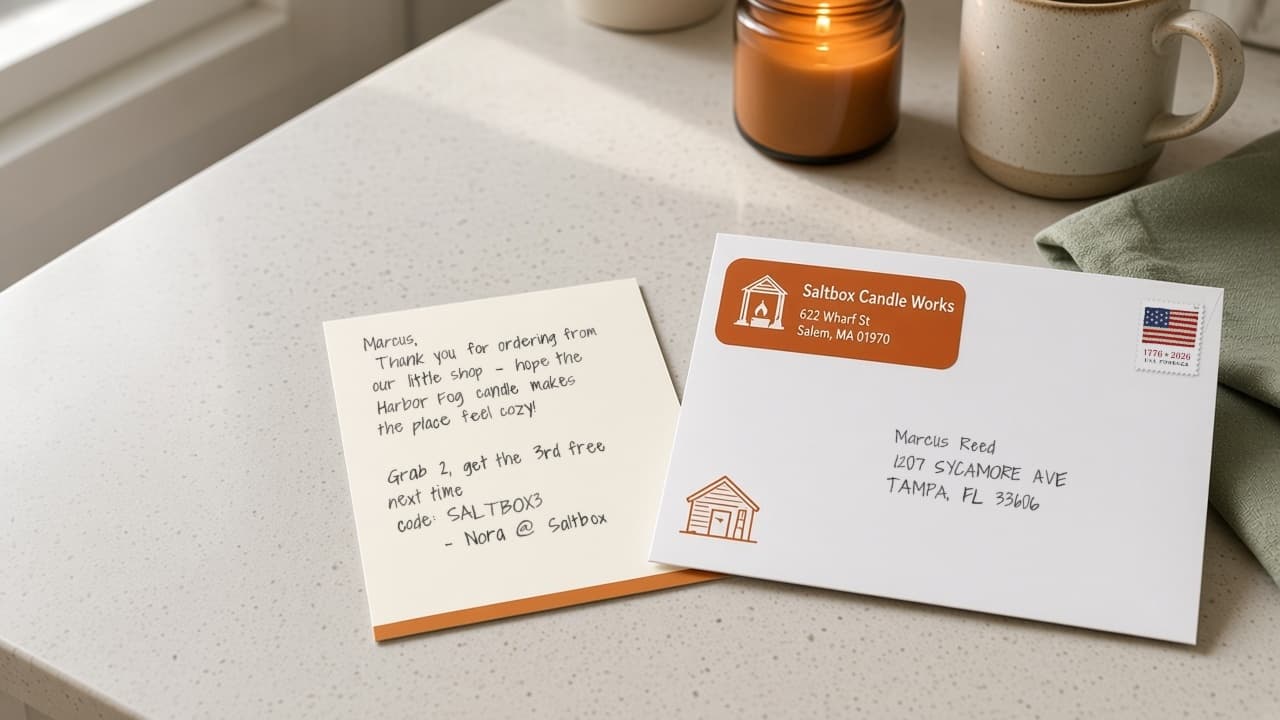
Tangible Post is not a postcard or a generic handwritten letter. It is a branded experience that lives outside the product you shipped. Every package is built from the same core elements:
- A handwritten note. Your approved message, personalized for each customer and written in real ink with a real pen. It is not a printed font made to look like handwriting.
- A custom printed card. The other side of the note carries your own artwork, so the piece reads as yours from either side.
- A handwritten address. The envelope is addressed by hand, which signals that this is personal mail, not bulk mail.
- A real stamp. Real U.S. postage.
- A custom-printed envelope, if you add your design. Your branding carries through to the outside of the package.
- A printed return address. Add your return label and the customer knows who it is from before they open it.
Each element does a specific job. The handwritten address and real stamp get the envelope opened. The branded envelope and return address make the sender clear. The handwritten note makes the customer feel recognized. The printed card keeps the brand front and center.
For a closer look at each piece, see what actually gets mailed in a branded package and why the envelope and return address are the brand.
Why consistency is the point
Because the package is the same every time, it becomes recognizable. A customer who receives a thank-you after a first order and a note later in the year sees the same level of care both times. Over time, that consistency is what builds loyalty: the sense that this brand pays attention.
Consistency also makes your team's job simpler. Instead of re-deciding what the mail looks like every time, you focus on the decisions that actually move results:
- Who should receive it. Use your Klaviyo segments or a customer CSV to pick the audience: new buyers, first-time customers who have not ordered again, VIPs, replenishment customers, or lapsed customers.
- What the note should say. Write the message and offer once, then personalize it with merge fields such as name, coupon code, expiration date, or a profile field you import from Klaviyo. (What to write in a handwritten thank-you note has examples.)
- When it should arrive. Send it as a standalone campaign or as part of an automated lifecycle flow.
The package stays the same. The message, audience, and timing are where your strategy lives. When you're ready to judge results, how to measure direct mail ROI for ecommerce walks through matchback and holdout groups.
A quality standard behind every package
A consistent package also means a consistent standard of quality. Tangible Post backs that standard with the Tangible Promise. Every piece should be printed on the stock you chose with your artwork reproduced faithfully, written legibly with a real pen, correctly assembled and addressed to the right person exactly as you approved it, and mailed by your scheduled send date.
If the craft falls short, tell the team within 30 days of your send date. They will reprint and re-mail the affected pieces at their cost or credit your account, whichever you prefer. The promise is clear about its limits, too. It covers production, not response rates, and it does not cover carrier issues after the mail reaches USPS, outdated addresses, or content you approved.
Start from what the customer should feel
If your goal is for customers to remember you and choose you again, it helps to start from the experience you want them to have and build one package that delivers it every time.
That is what Tangible Post does: one consistent handwritten package, with a handwritten note, a custom card, a handwritten address, a real stamp, and your branding on the envelope and return address when you add them. Your team picks the customers and the message. Tangible Post handles production, postage, and mailing.
If you are planning your next post-purchase, second-purchase, or win-back touch, start with one question: what should a customer feel when your mail arrives? Set up your Tangible Post account and send your first branded package.