
You worked hard to get that first order. You paid for the ads, tested the creative, and fought for attention in a crowded feed. But a first order is a trial, not a relationship. The real return on that spend shows up when the customer comes back on their own.
For most e-commerce brands, getting from the first purchase to the second is where the most value is won or lost. The good news is that you already have what you need to do it well: you know who bought, what they bought, and when. Here's how to use that to turn first-time buyers into repeat customers.
Start by making the first purchase a success
The best way to earn a second purchase is to make the first one go well. Before you think about offers, check the basics:
- Clear order communication. Confirmation, shipping updates, and delivery notices should be accurate and on time.
- Help using the product. If there's anything to learn (how to use it, care for it, set it up, or build a routine around it), send that guidance soon after delivery.
- Easy support. Make it obvious where to go if something isn't right.
A customer whose product arrived on time and worked as promised is already halfway to buying again. A discount code rarely wins back a customer who had a bad first experience.
Find your reorder window
Timing matters as much as the message. Reach out too early and it feels pushy; too late and the customer may have moved on or bought from someone else.
Look at your own order history to see how long first-time buyers usually take to place a second order. That gap will differ by category: consumables and replenishment products tend to come back sooner, while durable goods take longer. Plan your second-purchase outreach to land a little before that typical gap, while your brand is still fresh in the customer's mind.
Segment first-time buyers by what they bought
Not every first-time buyer needs the same message. Split them into Klaviyo segments based on things like:
- Product or category purchased. Someone who bought a refillable product needs a restock reminder. Someone who bought a starter item may be ready for a complementary product.
- Order value. Higher-value first orders may deserve a more premium follow-up.
- Whether they used a first-order discount. These buyers may need a reason to buy at full price, such as product education or proof of value, rather than another deep discount.
- Engagement. Buyers who have stopped opening your emails may need a different channel entirely. If they've gone quiet for longer, how to win back lapsed ecommerce customers covers that group.
The more your message reflects what the customer actually bought, the less it feels like marketing and the more it feels like service.
Choose the right next step
Once you know who you're talking to and when, decide what the next step is for each segment. A few common options:
- Replenishment: remind them before they run out.
- Cross-sell: suggest a logical next product based on the first purchase.
- Education: help them get more out of what they already own.
- A small, personal incentive: keep it for customers who are a good fit but haven't come back yet, and make it feel like recognition, not a clearance sale.
Each segment should get one clear reason to come back.
Add a touch that doesn't compete in the inbox
Your post-purchase flow probably already includes email and possibly SMS. Those channels matter, but every other brand the customer has bought from is in the same inbox. When you're trying to earn a second purchase, standing out matters.
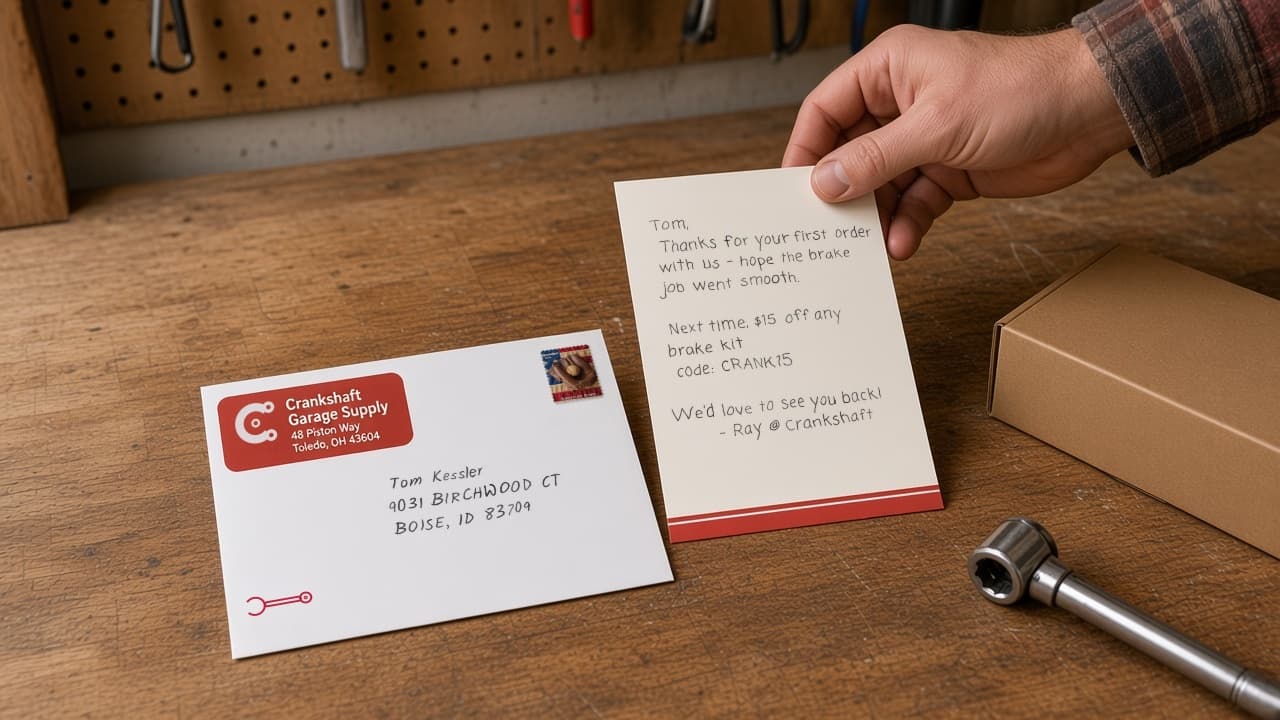
A handwritten note in the mailbox works differently. Done well, it's a branded piece outside the product, not a postcard or a generic letter (what actually gets mailed in a branded package). It recognizes the person behind the order, gives them something physical to hold, and doesn't have to compete in another digital auction. For a first-time buyer, a personal thank-you that mentions what they bought, and perhaps includes a unique code for their next order, can be the moment that makes your brand feel like more than another checkout page. For wording ideas, see what to write in a handwritten thank-you note.
To make this work at scale, the note should draw on the same data that drives your email flows: the customer's name, a unique offer code, and an expiration date that gives them a reason to act. With Tangible Post, the note can also mention what they purchased if you import that as a custom field from your Klaviyo or CSV data (in one-time campaigns; flows use the standard fields).
Measure the second purchase, not just engagement
Opens, clicks, and site visits are useful signals, but the number that counts is whether first-time buyers actually placed a second order. Track:
- The share of first-time buyers who make a second purchase within your reorder window
- Revenue from those second orders
- How each segment and channel performs, so you can scale what works
When you can tie outreach directly to orders and revenue, it's much easier to decide where to invest next. For mail specifically, how to measure direct mail ROI for ecommerce walks through matchback and holdout groups.
Make the next order feel natural
Turning first-time buyers into repeat customers doesn't take a complete marketing overhaul. Get the first experience right, reach out at the right time, tailor the message to what each customer bought, and give them a reason to come back that feels personal.
If you want to try a handwritten, branded note for your first-time buyers using the Klaviyo segments you already have, set up your Tangible Post account and start with one segment.