
Every e-commerce brand has a group of people who bought once or twice and then went quiet. You already paid to acquire them, and you know what they bought and when they stopped. You don't need to find them. You need to give them a reason to come back.
Most advice on how to win back lapsed customers stops at email. Email belongs in the plan, and we'll cover it briefly. But if a customer has stopped opening your messages, sending more of the same may not change much. This guide covers the email basics, then shows where a physical mail step fits.
Step 1: Define who counts as "lapsed"
Decide what lapsed means for your store, based on how often people normally buy.
- Replenishment products (skincare, supplements, coffee, pet food): a customer may count as lapsed shortly after they would normally have reordered.
- Considered purchases (apparel, home goods, gear): the window is usually longer.
- Gift-driven or seasonal products: lapsed may mean they skipped the season when they usually buy.
Use your order history to find the typical gap between purchases, then set a threshold past it. Your email platform or a CSV export usually has what you need: last order date, order count, spend, and products.
Step 2: Segment before you send
Lapsed customers aren't all the same, and a single message for everyone is easy to ignore. A few useful splits:
- One-time buyers vs. repeat buyers who stopped. A repeat buyer who went quiet already liked you enough to come back once. A one-time buyer may need more of a reminder of why they chose you.
- Higher-value vs. lower-value customers. This helps you decide where a more expensive channel makes sense.
- By product category. What someone bought tells you what to say next.
Smaller segments make messages easier to write and results easier to read.
Step 3: Run a short win-back email sequence
Email is cheap and fast, so start there. A simple sequence might include:
- A reminder. Mention what they bought and what's new or relevant since then. No discount yet.
- A reason to return. An offer, a restock, a new version of a product they liked, or useful content tied to their purchase.
- A last note. A plain, honest message asking if they still want to hear from you. This also helps keep your list clean.
Keep the copy personal and specific. "We noticed you haven't ordered in a while" is weaker than a message that names the product and gives a real reason to look again.
The limit is that email only works if people open it. For customers who have tuned out your sender name, a different channel can help.
Step 4: Add a mail step for the customers email isn't reaching
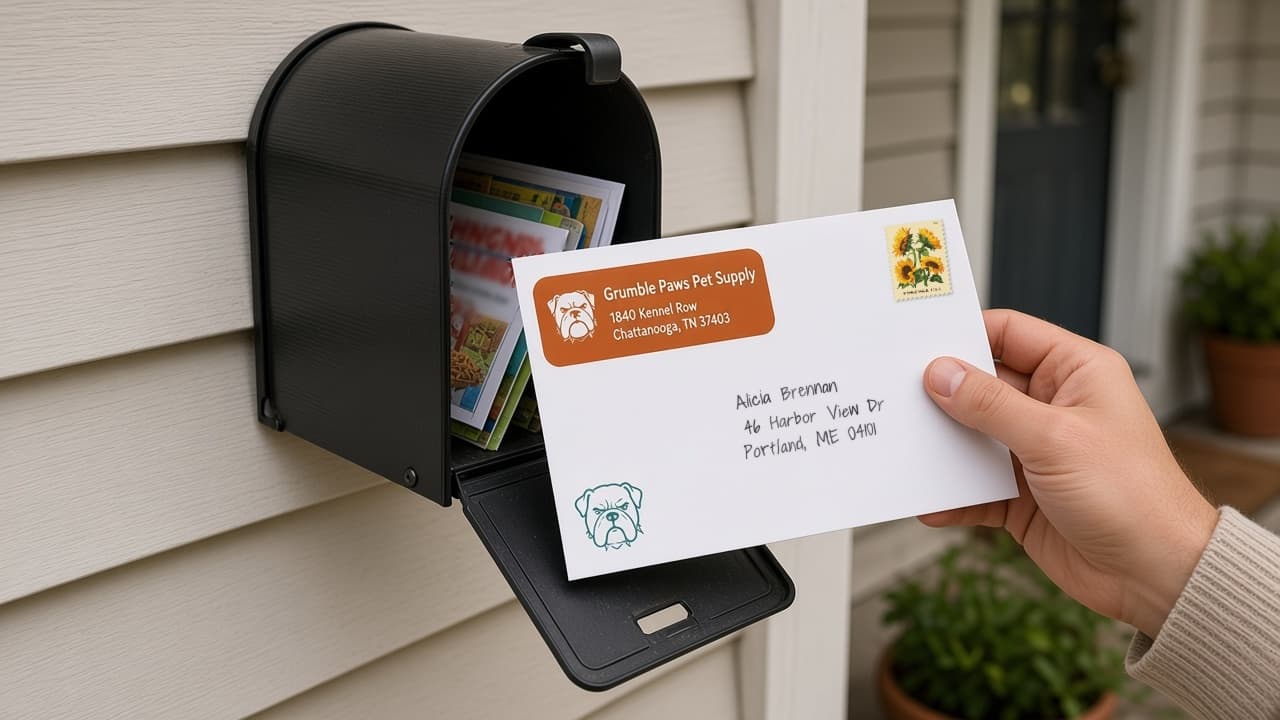
A piece of mail doesn't compete with a crowded inbox or a social feed. It shows up at home, and someone has to physically pick it up. For lapsed customers, that can be a useful way to say "we remember you" in a form that's hard to scroll past.
What you send matters. A generic postcard can look like any other promotion. The goal of a win-back piece is loyalty, so the customer feels their money went to the right merchant, and they're reminded why they chose you in the first place.
That's the approach Tangible Post takes. Each piece is a branded experience outside the product itself (what actually gets mailed in a branded package), built from:
- A handwritten note written in real ink with a real pen, personalized with details like the customer's name, a unique coupon code, an expiration date, or a profile field you import from Klaviyo
- A custom card printed with your brand's creative on the other side of the note
- A handwritten address and a real stamp
- Your custom-printed envelope, if you add your design (otherwise it goes out in a plain white A7 envelope)
- A printed return address, when you add a return label (here's why the envelope and return address are the brand)
The piece feels like it came from your brand, not a mail house. Keep the note short and specific to the customer; the same rules in what to write in a handwritten thank-you note apply to a win-back message.
Step 5: Connect mail to the data you already have
The mail step works best when it uses the same segments as your email sequence. Tangible Post can connect to Klaviyo directly or work from an uploaded customer CSV. Win-back is one of the lifecycle uses the company supports, alongside post-purchase, second-purchase, cross-sell, replenishment, VIP and loyalty, and milestones. Mail can go out as a standalone campaign or as part of your automated flows.
A practical setup:
- Send your win-back email sequence first.
- Pull customers who didn't engage or didn't purchase into a mail segment.
- Send the mail piece with an offer or message that matches the emails, plus a unique code so you can track it.
Step 6: Measure what happened
Decide before you send how you'll judge the campaign; how to measure direct mail ROI for ecommerce covers matchback, holdout groups, and the math. Unique codes make it straightforward. Tangible Post also uses matchback attribution, which matches mail recipients against orders placed during a set attribution window after the campaign launches, using order data synced from Klaviyo, and reports the orders and revenue matched to each mailing.
Results depend on your offer, list, timing, and market. Start with a segment you understand and expand what works.
A quieter way to say "we remember you"
Lapsed customers aren't a lost cause. They're people who already trusted you once. A well-segmented email sequence will bring some of them back. For the ones it doesn't reach, a branded, handwritten piece in the mailbox gives you another way to show up.
If you have a lapsed segment in Klaviyo or a customer CSV, you can start with the list you already have. Set up your Tangible Post account and plan your first win-back mailing.