
When e-commerce teams hear "post-purchase mail," many picture one of two things. The first is a printed card tucked into the shipping box next to the product. The second is a free gift: a sample, a sticker, a small extra that shows up with the order.
Both have their place. But neither is what this post is about.
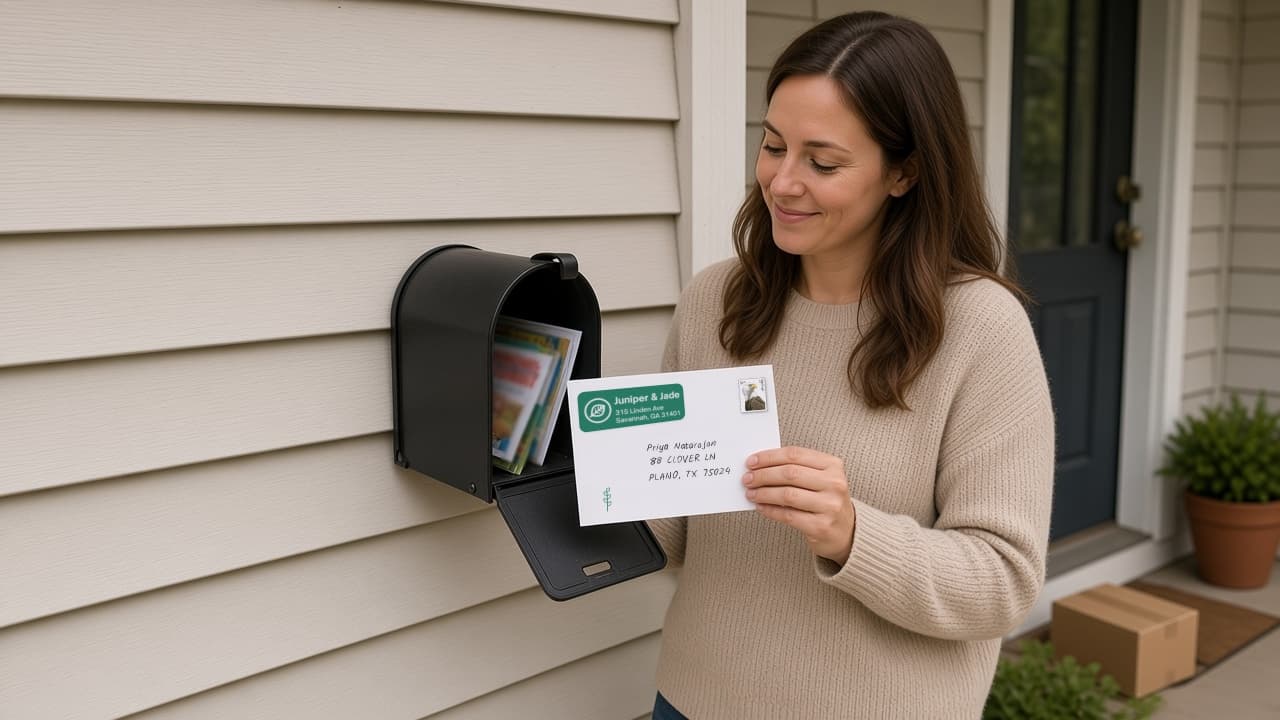
There is a third option that often gets overlooked: a piece of mail that is not a gift and is not inside the box. It arrives separately, on its own, addressed to the customer by hand. It gives the customer a second moment with your brand after the unboxing is over.
Why the box insert has limits
A box insert shows up at the same moment as the product. That moment is crowded. The customer is opening packaging, checking the item, maybe trying it on or setting it up. Your insert is competing with the thing they actually paid for.
Once the box is opened, that moment is over.
A separate piece of mail creates a new moment. It shows up in the mailbox when the customer isn't distracted by the product, so it gets its own attention.
Why it isn't a free gift
A free gift is about the product: more stuff, a bonus, a perk. Post-purchase mail of this kind is about the relationship. It isn't trying to add value through another item. It's trying to tell the customer something simpler: there is a real brand behind the box, and that brand noticed you.
That difference matters for how you plan it. A gift is judged by what's inside. A branded mailing is judged by how it feels to receive: whether it looks considered, whether it's personal, and whether it feels like it came from the company the customer chose to buy from.
What a branded experience outside the product looks like
Tangible Post's mailings are built as a branded experience that lives outside the product. That isn't the same as a postcard or a generic handwritten letter. Each piece is built from:
- A handwritten note, written in real ink with a real pen, with a custom card printed on the other side
- A handwritten address on the envelope
- A real stamp, using real U.S. postage
- Your custom-printed envelope, if you add your design (otherwise it goes out in a plain white A7 envelope)
- A printed return address that names your brand, when you add a return label
With your envelope design and return label, the customer knows who it's from before they open it. The handwritten address and real stamp signal that it was made for one person. The note and printed card deliver your message and brand creative together. For a closer look at each piece, see what actually gets mailed in a branded package.
Personal goes beyond a first name
Personalization in a mailing like this can go further than a name in the greeting. Tangible Post supports merge fields such as names, expiration dates, unique coupon codes, or a profile field you import from Klaviyo. The note can include an offer built for them, or mention what the customer bought if you import that as a Klaviyo profile field, while staying consistent with your brand.
For teams that use Klaviyo, you can connect your account directly and bring in segments and the profile fields you choose. You can also upload a CSV with names and mailing addresses.
The goal is loyalty, not another promotion
The point of a separate post-purchase mailing is loyalty. You want the customer to feel their money went to the right merchant. That feeling is what makes a second purchase more likely, and it's hard to create with another retargeting ad that looks like everyone else's.
Tangible Post describes the post-purchase use case as showing new customers "there's a real brand behind the box." The same approach carries into other lifecycle moments listed on the site: second purchase, cross-sell, replenishment, VIP and loyalty, milestones, and win-back (see how to win back lapsed ecommerce customers). Post-purchase is a natural starting point, because it builds on a customer relationship that has just begun.
Practical questions to ask before you mail
If you're considering a separate post-purchase mailing, a few questions will help shape it:
- Who gets it? All new customers, first-time buyers in a certain category, or customers above an order value?
- When does it arrive? Plan the timing so it lands after the product, as a second moment rather than a duplicate of the first.
- What does it say? A thank-you, a note about what they bought, an offer for their next order, or a mix. What to write in a handwritten thank-you note has examples.
- Does it look like you? Your card artwork, plus your envelope design and return label if you add them, should all read clearly as your brand.
Your team sets the audience, message, offer, and brand experience, and you see exactly what will print before you pay. If plans change, you can cancel while the campaign is still processing, before it goes to print. Tangible Post handles production, postage, and mailing.
What's promised, and what isn't
It helps to be clear about expectations. Under the Tangible Promise, every piece is meant to be properly made, written with a real pen, correctly assembled, and mailed by your scheduled send date. If the craft falls short, you can report it within 30 days of your send date and the affected pieces will be reprinted and re-mailed at Tangible Post's cost, or credited to your account.
The promise covers production, not results. Response depends on your offer, your list, your timing, and your market. That's an honest frame for any mail program: the piece's job is to arrive well made and feel personal.
Start with one segment of new customers
If your post-purchase experience ends when the box is opened, a separate mailing may be worth testing. Start with one segment of new customers and plan the timing so it arrives after the product. Then watch how those customers respond over time; how to measure direct mail ROI for ecommerce covers matching orders back to the mailing.
When you're ready, set up your Tangible Post account and plan your first post-purchase mailing.